1990 · Home console
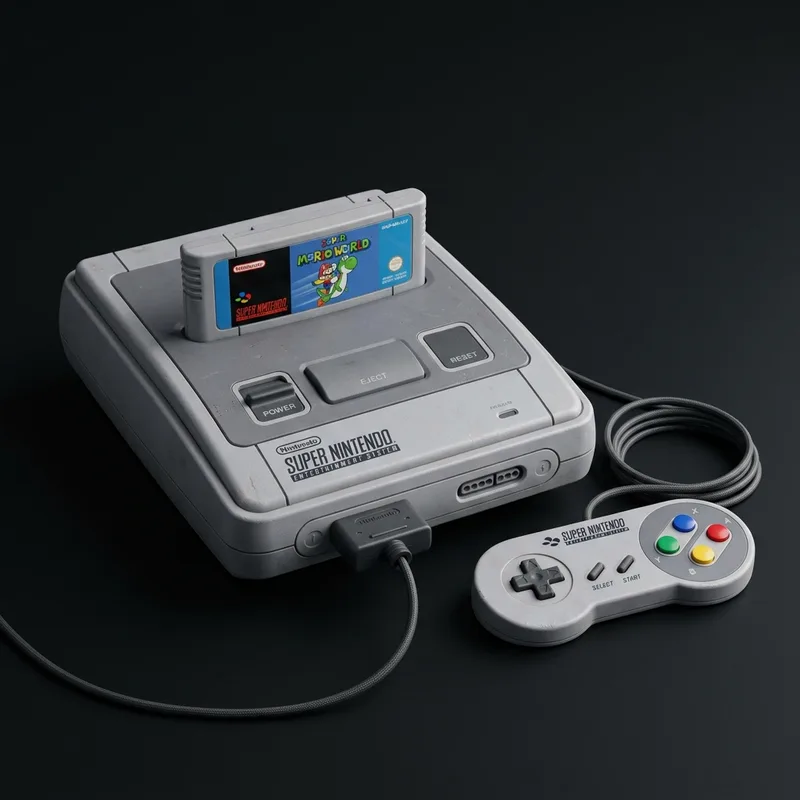
Super Nintendo Entertainment System
16-bit graphics, Mode 7 and a controller that set the layout for decades. Home to some of the best games ever made.
- First release
- Super Famicom, Japan, 1990. SNES, North America, 1991
- Units sold
- 49.10 million
- Media
- Cartridge
- Region lock
- Yes (cartridge shape and lockout chip)
- Predecessor
- NES
- Successor
- Nintendo 64
Why it mattered
The SNES arrived in a fierce fight with Sega's Mega Drive / Genesis. Its strengths were colour, sound and Mode 7, a graphics mode that could rotate and scale a background layer to fake 3D, used in F-Zero and Super Mario Kart. Some cartridges also contained extra chips, such as the Super FX in Star Fox, to push the hardware further.
Its controller added X and Y buttons and shoulder buttons. Almost every controller since uses a similar layout.
Models to know
- Super Famicom / PAL SNES: rounded design with colourful buttons.
- North American SNES: boxier, with purple and lavender buttons.
- SNES Jr. (SNS-101, 1997): smaller and cheaper, no reset light and fewer video outputs.
Buying one today
The grey plastic often yellows unevenly (see retro console care). North American and Japanese cartridges are different shapes, so check the region before buying games.
Where to start
Super Mario World, The Legend of Zelda: A Link to the Past, Super Metroid, Donkey Kong Country, Super Mario Kart, EarthBound and Chrono Trigger.